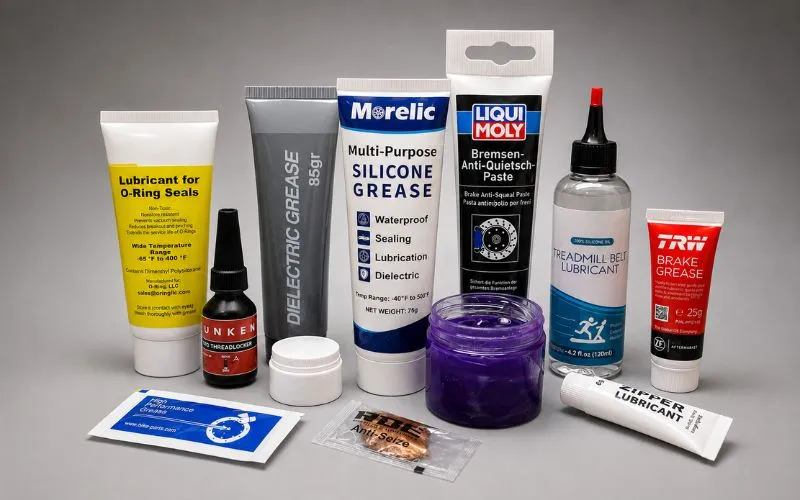
Brake Grease Manufacturer Background

OEM&ODM Solution of SMALL-PACK GREASE & Adhesive

Your Trusted Brake Grease Manufacturer in China

Specialized brake lubricants engineered for caliper pins, brake pads, wheel hubs, and anti-seize applications. Formulated to withstand extreme temperatures and harsh environments.

15+ Years Experience
30+ Industries Served
5,000+ Application Cases
50+ Countries Exported
Flexible MOQ
Global Compliance
what is brake grease for caliper pins and brake pads

What Is Brake Grease?

Brake grease (or brake lubricant)  is a specialty lubricant used on selected moving, sliding and contact points around brake systems. It is commonly applied to caliper guide pins, bushings, pad ears, abutment clips, backing plates, wheel hub contact areas and selected brake hardware. The right brake grease helps reduce sticking, vibration, corrosion and brake noise when applied correctly.

Important: Never be applied to the friction surface of the brake pads or rotors, as this will cause brake failure

Smooth Caliper Movement

Helps guide pins and sliding parts move correctly.

Noise & Vibration Reduction

Helps reduce squeal caused by pad-to-hardware contact or vibration.

Corrosion Protection

Helps protect selected metal contact areas from rust and sticking.

Rubber & Plastic Compatibility

Silicone-based options can be selected for guide pin boots and rubber contact areas.

High-Temperature Stability

Ceramic and anti-seize options can be selected for brake pad and wheel hub contact areas.

Problems Proper Brake Grease Helps Solve

Selecting the right lubricant and packaging format prevents assembly issues, reduces end-user complaints, and protects brake components.

Caliper guide pins become dry or sticky

Guide pins need a lubricant that stays in place and remains compatible with rubber boots.

Brake pads squeal after installation

Improper pad-to-hardware contact and vibration can cause noise. A suitable brake pad grease can help reduce squeal when applied to the correct area.

Wrong grease damages rubber parts

Petroleum-based greases may not be suitable for rubber boots or seals. Silicone-based brake grease is often selected for metal-to-rubber contact points.

Wheel hubs and bolts seize after heat exposure

Wheel hub and anti-seize applications may require a copper or ceramic paste instead of a standard caliper grease.

Repair kits need clean single-use packs

Automotive repair kits often require 1 g, 2 g, 3 g or 5 g sachets with stable weight and leak-resistant sealing.

End users apply grease in the wrong place

Brands need clear label instructions and usage diagrams to reduce complaints and safety risk.

Industrial-Grade Brake Lubricants

Engineered for extreme thermal stress, superior washout resistance, and total system compatibility.

Silicone Caliper Grease
ML-202

Silicone Caliper Pin Grease

100% EPDM Rubber Safe

High-performance silicone base oil thickened with advanced synthetics. Provides excellent water washout resistance and prevents caliper binding without degrading rubber seals.

Applications: Caliper guide pins, rubber boots, slider pins
  • Temp Range -50°C to 200°C
  • Base Oil Premium Silicone
  • Color Translucent White
Copper Anti-Seize Paste
ML-204

Copper Anti-Seize Paste

Extreme High Temperature

Formulated with premium micro-copper flakes in a non-melting carrier. Prevents brake pad squeal and protects threads from seizing under extreme thermal stress.

Applications: Wheel hubs, bolts, threaded parts
  • Temp Range -20°C to 1100°C
  • Solid Lubricant Micro-Copper
  • Color Copper
Ceramic Brake Paste
ML-203

Ceramic Brake Pad Grease

Metal-Free & ABS Compatible

Advanced metal-free formulation using ceramic solids. Ideal for modern ABS systems and aluminum calipers to prevent galvanic corrosion and sensor interference.

Applications: Backing plates, pad ears, abutment clips
  • Temp Range -40°C to 1400°C
  • Solid Lubricant Ceramic Particles
  • Color White 

Need a Custom Formulation?

Our engineers can develop a specific brake grease tailored to your exact operational parameters, or develop equivalent alternative to branded grease.

Silicone Caliper Grease vs Ceramic vs Copper Anti-Seize

Item Silicone Caliper Grease (ML-202) Ceramic Brake Grease ( (ML-203) Copper Anti-Seize Paste (ML-204)
Main Role Lubrication for rubber/plastic & guide pins High-temp pad/hardware contact lubrication Anti-seize protection for metal assembly
Typical Contact Area Guide pins, boots, wheel cylinder areas Pad backing plate, ears, abutment clips Wheel hubs, bolts, threaded parts
Rubber Compatibility Often selected for rubber Depends on formula; test first Usually not preferred for boots
When To Choose When guide pins or rubber matter When pad noise, heat & hardware matter When metal parts may seize after heat

One brake service kit may use more than one grease type. Morelic can help buyers select separate small packs for caliper pins, brake pad contact points and wheel hub anti-seize applications.

Where do you put the brake grease?

Different brake points require different lubrication strategies. Applying the right formula to the correct area is critical for brake performance.

Caliper Guide Pins

Used on guide pins and slider pins to help maintain smooth caliper movement.

Recommend: #202 Caliper Grease

Rubber Boots & Bushings

Silicone-based brake grease can be selected for metal-to-rubber contact areas.

Recommend: #202 Caliper Grease

Brake Pad Ears(tabs)

Applied lightly where pad ears contact the bracket to help smooth pad movement.

Recommend: #203 Brake Grease

Abutment Clips

Selected contact areas only/thin film only after clean and install hardware.

Recommend: #203 Brake Grease

Pad Backing Plate

Used on the back side of the pad, NEVER THE FRONT(Friction surface)!

Recommend: #203 Brake Grease

Wheel Hub Contact

Copper or ceramic anti-seize paste can help prevent sticking in assembly areas.

Recommend: #204 Anti-Seize 

Drum Brake Backing Plate

Applied to the raised friction pads to ensure smooth brake shoe movement and prevent squeaking.

Recommend: #203 Brake Grease

Drum Brake Shoe Contact Points

Essential for metal-to-metal contact areas where brake shoes pivot, slide, or rest.

Recommend: #203 Brake Grease

Drum Brake Star Adjuster Threads

Prevents seizing and corrosion on adjuster screws, ensuring reliable long-term brake adjustment.

Recommend: #204 for anti-seize or #203

Brake grease application points

How To Apply Brake Grease Correctly: Step-by-Step Guide

Brake grease helps only when applied in the right place. Wrong placement can contaminate friction surfaces and reduce braking performance.

Brake grease application video placeholder

Watch the full application tutorial

1

Clean the components

Remove dirt, old grease, rust and brake dust from the area before applying new grease.

2

Identify contact points

Apply grease only to approved moving, sliding or contact points like guide pins and pad ears.

3

Choose the right grease

Use silicone for rubber, ceramic for pad contact, and copper for wheel hub anti-seize.

4

Apply a thin layer

A small amount is usually enough. Excess grease can migrate and collect dust.

5

Keep friction surfaces clean

Do not apply grease to the rotor face, drum friction surface or the friction side of brake pads.

6

Reassemble & inspect

After assembly, confirm smooth movement of guide pins and hardware before finishing.

warning icon on brake pad friction surface

Start to Discuss Your Brake Grease Project?

Leverage our 15 years of industry expertise to develop custom brake grease solutions. From caliper pins to hardware, we provide OEM & ODM support and global compliance guidance to ensure optimal performance and safety for your automotive maintenance products.

Brake Grease vs Regular Grease

Comparison Item Brake Grease Regular Grease
Designed For Brake system contact, sliding and anti-seize points General mechanical lubrication
Temperature Demand Higher heat resistance required Depends on general-use formula
Rubber Compatibility Silicone-based options available for rubber boots Petroleum-based options may not suit rubber parts
Risk If Misused Friction surface contamination, noise, sticking May melt, wash out or damage rubber in brake areas
Packaging Sachets, tubes, syringes, jars, repair kit packs Tubes, cartridges, pails

Brake systems generate heat and contain rubber, metal and friction materials. A lubricant used around brakes should be selected by contact material, temperature, load and application point, not simply by grease appearance.

How To Choose the Right Brake Grease

1. Confirm Part

Choose from guide pins, rubber boots, pad ears, hubs, or repair kits.

2. Check Material

Confirm rubber, plastic, metal, ceramic, or mixed surfaces.

3. Define Function

Lubrication, noise reduction, anti-seize, or kit packaging.

4. Select Type

Silicone, ceramic, copper, or custom formula based on needs.

5. Confirm Pack

Sachet, tube, syringe, jar, label warning, and MSDS/TDS.

OEM Small-Pack Brake Grease Solution for Your Brand

Morelic supports brake grease filling for caliper repair kits, brake pad installation kits, automotive aftermarket packs, hardware retail products and e-commerce brands.

full packaging family sachet tube syringe jar custom carton

Formula Customization

Parameter Tuning:

Custom adjustments for Base Oil Viscosity, NLGI Grade, and specific performance additives.

Brand Equivalents:

Expert formulation of cost-effective, high-performance alternatives to major global brands.

Specialized Environments:

Engineering for extreme temperatures, heavy loads or high humidity  operating conditions.

Packaging & Branding

Flexible Sizes:

1-10g tear pouches, 3-120g squeeze tubes, jars, bottles, pails, and drums.

Private Labeling:

Custom logo pre-printing and bespoke label design for your brand identity.

Retail Ready:

Retail-friendly packaging solutions for hardware, automotive, and plumbing distributors.

WhatsApp Discussion

When Brake Grease May Not Be the Right Product

Avoid common application mistakes to ensure safety and prevent part damage.

Do not apply to friction surfaces

Never apply grease to the rotor face, drum friction surface or the friction side of brake pads.

Do not use regular grease on boots

Petroleum-based products may swell rubber parts. Use a suitable silicone brake grease.

Do not use copper anti-seize everywhere

Copper anti-seize is for selected metal anti-seize areas. It is not a universal caliper pin grease.

Do not use one formula for all points

Guide pins, pad ears, backing plates and wheel hubs may require different grease types.

Do not over-apply grease

Excess grease can migrate, attract dirt or contaminate nearby sensitive components.

Do not skip compatibility testing

Test before mass production if the product touches special rubber boots, plastics or coatings.

Why Choose Morelic

15+ Years Manufacturer

Proven expertise in formulating and packaging high-performance silicone grease and specialized industrial lubricants.

OEM / ODM Solution

End-to-end custom packaging, private labeling, and precise formula matching tailored to your specific application.

Cost-Effective Alternative To Branded Grease

Achieve the same or better performance as premium brand lubricants while significantly optimizing your procurement budget.

Global Compliance

Complete export documentation including Reach, RoHS, MSDS and TDS, ensuring seamless customs clearance and worldwide market entry.

Flexible MOQ & Fast Delivery

Agile production lines designed to support both pilot testing batches and large-scale repeat supply with stable lead times.

Morelic Production Facility
Advanced Manufacturing
Grease Production Workshop
Production
Quality Control Laboratory
Laboratory
Automated Filling Line
Filling Line
Global Logistics Warehouse
Warehouse

From Formula Review to Export-Ready Packs

1. Application Review

Collect brake part, contact material, temperature, packaging size, and document requirements.

2. Sample Preparation

Select caliper grease, pad grease, ceramic paste, copper anti-seize or custom formula.

3. Packaging Confirmation

Confirm sachet, tube, syringe, jar, label, carton and outer box details.

4. Filling & Sealing

Perform small-pack filling, sealing, weight check, appearance check and batch ID.

5. Document Preparation

Prepare MSDS/TDS/COA/RoHS/Reach or customer-required files based on the selected formula.

6. Export Support

Arrange export cartons, pallets, packing details and logistics coordination.

Brake Grease FAQ

Expert technical answers and procurement guidelines for distributors, OEM manufacturers, and large-scale wholesale buyers.

What kind of grease do you use on brakes?
Use high-temperature, specialized brake lubricants. We recommend silicone-based grease for caliper pins and rubber components, and ceramic brake paste for metal-to-metal contact points. Avoid standard greases. Proper lubrication prevents squeal and ensures even pad wear.
Where should you NOT put brake grease?
NEVER apply brake grease to friction surfaces, including the brake pad faces and rotors (discs). Contamination causes severe braking failure. Only apply grease to sliding pins, backing plates, abutment clips, and pad ears.
Is silicone or ceramic brake grease better?
They serve different purposes. Silicone grease is best for rubber compatibility and water resistance (ideal for caliper guide pins). Ceramic grease excels at withstanding extreme temperatures and heavy loads (perfect for metal-to-metal contact).
Can I use regular grease on brake parts?
No. Standard chassis or lithium greases will melt and wash out under extreme braking temperatures (often exceeding 400°F/200°C). They also cause rubber seals to swell and fail. Only use specialized brake lubricants.
Do you really need brake grease?
Yes, it is essential. Brake grease dampens vibrations to prevent brake squeal, stops moving parts from seizing, and protects against corrosion from water and road salts.
How long does brake grease last?
Applied grease lasts the entire lifespan of the brake pads, resisting washout and thermal breakdown. For inventory, unopened OEM-grade brake grease has a stable shelf life of 3 to 5 years when stored in a cool, dry environment.
Can I use WD-40 instead of brake grease?
Absolutely not. Standard WD-40 is a penetrating oil, not a high-temp lubricant. It will evaporate immediately under braking heat and severely degrade rubber caliper seals. Always use dedicated brake grease.
What happens if you don't grease brake pads?
Failing to lubricate leads to loud brake squeal, uneven pad wear, premature brake failure, and rapid hardware corrosion. Proper lubrication at contact points is critical for safety and performance.
Can you provide custom formulation and private labeling for brake grease?
Yes. As an OEM/ODM manufacturer, we offer custom formulations tailored to your performance specs and comprehensive private labeling services. Packaging options range from small custom-branded sachets to bulk drums.
What is your minimum order quantity (MOQ) for custom brake grease packaging?
We offer flexible MOQs. Standard formulations in default packaging have a low MOQ for market testing. Custom private label packaging, specific tube sizes, or unique sachets require varying MOQs based on project scope. Contact us for a precise quote.
Do you offer small sachet packaging for brake pad and caliper repair kits?
Absolutely. We supply durable, leak-proof small sachets (1g to 10g) ideal for brake pad replacement and caliper rebuild kits. These can be custom-printed with your logo and instructions.
Can you supply brake grease in bulk drums for large-scale manufacturing?
Yes. We supply premium brake grease in standard pails and large industrial drums for large-scale manufacturers and packaging facilities. Bulk purchasing offers significant cost advantages for high-volume operations.
Industrial Manufacturing Facility

Start Your Brake Grease OEM Project with Morelic

Ensure peak braking performance and eliminate noise with our premium, high-temperature brake grease. From 5g sachets for brake pad hardware kits to custom private-label tubes or bottles for automotive aftermarket brands, Morelic delivers expert formulation, custom packaging, and global compliance support. Partner with us to scale your brand today.

WhatsApp Tech Support

Please include your application, packaging size, target market, expected order quantity, and document requirements when sending an inquiry.