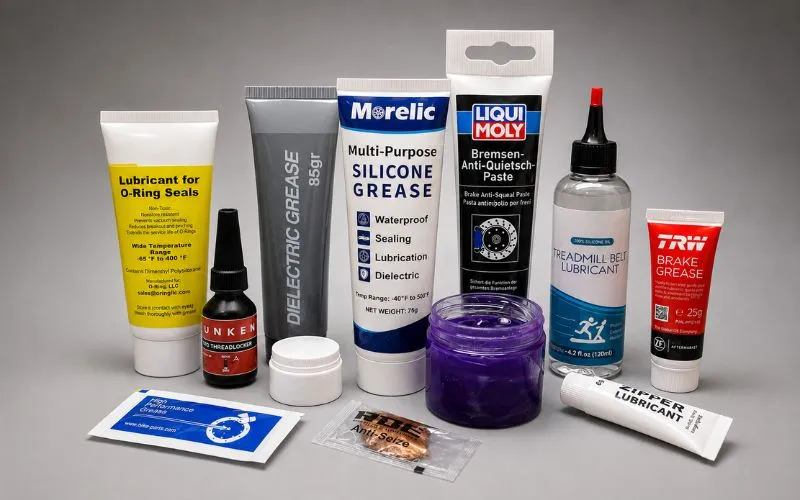
Choosing the right moly grease involves more than comparing 3% and 5% MoS₂ content. This guide explains its main applications, how to select the right formulation, and the key checks before use.
What Is Moly Grease?
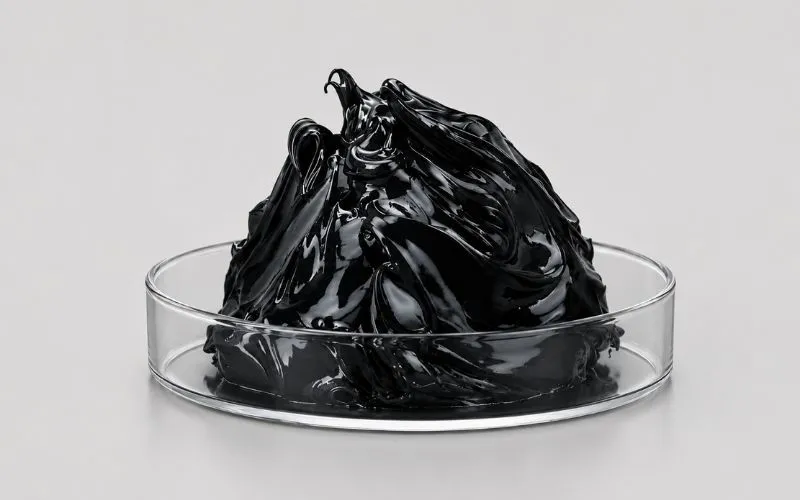
Moly grease is a heavy-duty lubricant fortified with molybdenum disulfide (MoS₂) designed to protect metal parts under extreme pressure, severe shock loads, and high heat.
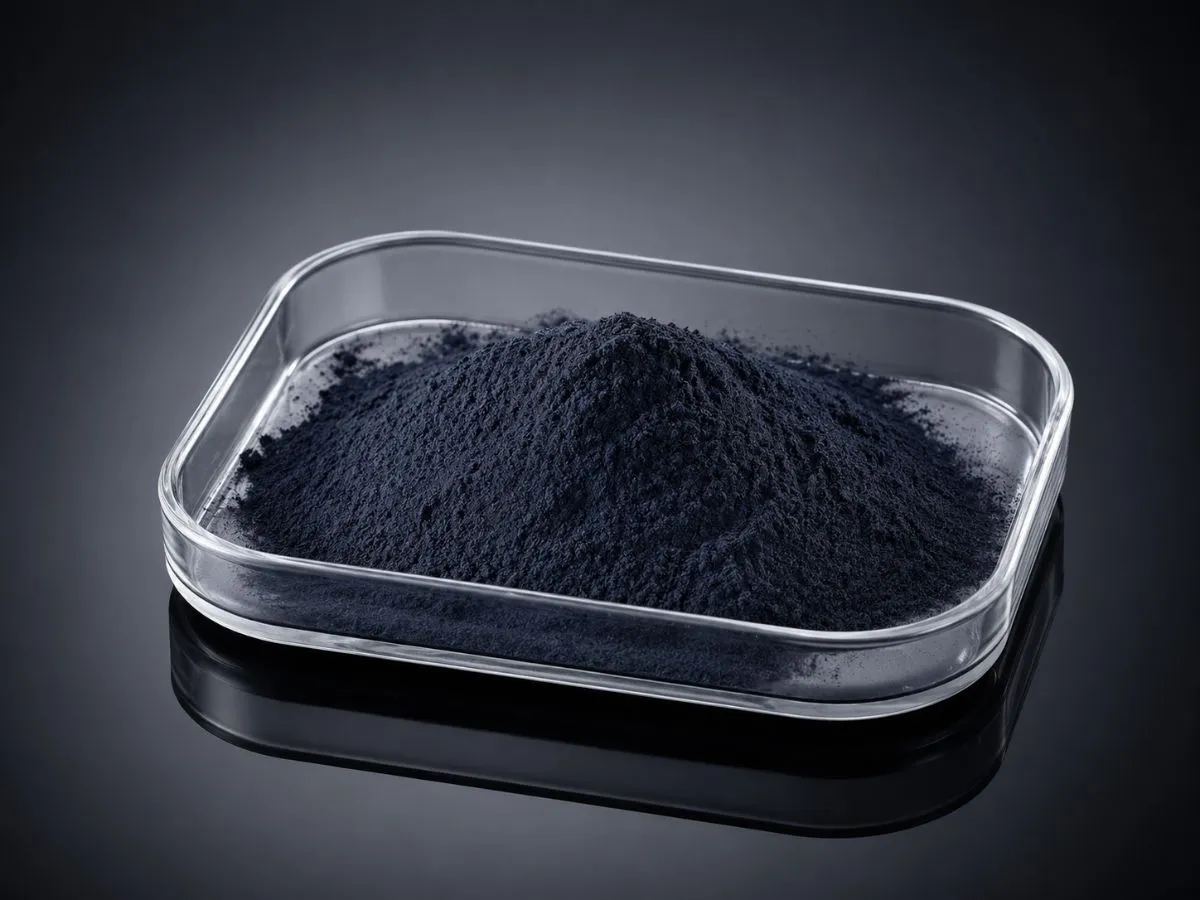
MoS₂ has a layered structure that allows relatively easy shear between layers. This can help reduce friction and wear under suitable mixed or boundary-lubrication conditions.
Moly and lithium describe different parts of a grease. MoS₂ is an additive; lithium or lithium complex identifies the thickener. One product can therefore be a lithium-complex EP moly grease.
Moly paste is different: it generally contains a relatively high proportion of solid lubricants and is often intended for assembly, running-in or specific sliding applications. Do not substitute ordinary moly grease where a particular paste is specified.
What Is Moly Grease Used For?
Moly grease is particularly useful to consider for loaded sliding or oscillating contacts. Select a product recommended for the exact component.
| Application | What to check |
|---|---|
| Excavator pins and bushings | OEM specification, viscosity, impact loads and water exposure |
| Kingpins, chassis joints and fifth wheels | Component recommendations, lubricant adhesion and seal compatibility |
| Splines and sliding joints | Whether the specified product is grease or assembly paste |
| Low-speed, heavily loaded bearings | Bearing type, load, speed and the product’s application guidance |
| CV joints | Exact joint design, specified grease and filling quantity |
Bearing suitability is application-specific. SKF LGEM 2, for example, contains MoS₂ and graphite for high loads, vibration and slow rotation. This does not make every moly grease suitable for every bearing.
For open gears and slew-ring assemblies, assess exposed gear teeth and internal bearing lubrication separately.
3% vs 5% Moly Grease: Which Should You Choose?
Follow the equipment specification first. Higher MoS₂ content alone does not prove better performance.
Commercial products include concentrations below 1% as well as 3% and 5%. For example, Mobilgrease XHP 222 Special contains 0.75 wt% MoS₂, uses a lithium-complex thickener and has NLGI 2 consistency with a base-oil viscosity of 220 mm²/s at 40°C. These published values describe that product only and do not establish equivalent performance for other greases.
| Selection question | Practical answer |
|---|---|
| OEM specifies 3% MoS₂ | Select a 3% product that also meets the other requirements |
| OEM specifies 5% MoS₂ | Select a 5% product that also meets the other requirements |
| No MoS₂ percentage is specified | Evaluate the application and complete formulation |
| Comparing two different products | Check viscosity, consistency, temperature guidance and relevant test data |
Do not assume that a 3% product can replace an OEM-specified 5% product, or that increasing to 5% automatically provides an acceptable upgrade.
Confirm that the stated percentage refers to MoS₂ by mass in the finished grease, rather than elemental molybdenum or total solids.
How to Choose Moly Grease
1. Check the Equipment Requirements
Start with the service manual, required lubricant specification and current product. Identify the component, movement, load, temperature range and lubrication method before comparing greases.
2. Match Base-Oil Viscosity
Base-oil viscosity affects the lubricating film. Slow movement and heavy loads may require a higher-viscosity oil, while higher speeds may require a lower viscosity to control friction and heat.
Selection must consider viscosity at operating temperature, not only the value at 40°C. Cold starting and delivery through lubrication lines also matter.
3. Select the Correct NLGI Grade
NLGI describes consistency—not oil viscosity, MoS₂ content or load capacity.
| NLGI grade | Consistency | Selection consideration |
|---|---|---|
| 0 | Very soft | Used in some systems requiring softer grease |
| 1 | Soft | May be specified for certain centralized or cold-service applications |
| 2 | Common general-purpose consistency | Widely used for manual greasing |
NLGI grade alone does not establish pumpability. Confirm the exact product and system requirements. The classification is based on worked penetration under ASTM D217.
4. Compare Meaningful Performance Data
Check the thickener, recommended service-temperature range, material compatibility and tests relevant to the application.
| Requirement | Useful data |
|---|---|
| Extreme-pressure performance | Four-ball weld load or load-wear index, ASTM D2596 |
| Wear prevention | Four-ball wear scar, ASTM D2266 |
| Wet-service performance | Water washout, ASTM D1264; water spray-off, ASTM D4049 |
| Stability and corrosion protection | Relevant mechanical-stability, oil-separation and corrosion tests |
Compare results using the same test methods and conditions. A four-ball weld load is a laboratory result, not the allowable load of your equipment. Typical values should also be distinguished from guaranteed specification limits.
Important Checks Before Use
Bearings and Automotive Components
Do not use a pin-and-bushing grease in high-speed bearings, electric motors, wheel bearings or CV joints unless the exact product meets the component’s requirements.
For rolling bearings, evaluate bearing size, speed, load and operating temperature together. There is no universal RPM cutoff for all moly greases.
Automatic Lubrication Systems
Confirm permitted consistency, low-temperature pumpability, total solid content and any particle-size restrictions.
Graco’s published guidance recommends 5% total solids or less for the automatic systems discussed in its article. This includes MoS₂ and other solids; it is not a universal limit for every system. A grease with 5% MoS₂ may contain more than 5% total solids.
Mixing and Changeover
Do not mix greases without confirming compatibility. Matching “moly” or “lithium” labels is insufficient because the complete formulations can interact differently.
Follow the equipment and lubricant suppliers’ changeover procedure. Removal, controlled purging or compatibility testing may be needed. ASTM D6185 provides a framework for evaluating grease mixtures.
Water Resistance and Temperature
MoS₂ does not make a grease automatically waterproof. Check water-resistance and corrosion data for the actual exposure.
Dropping point is not a continuous operating-temperature rating. Use the supplier’s recommended service range for the finished grease. Likewise, a solid-film temperature claim does not establish the temperature capability of the complete lubricant.
For elastomers, plastics, food-related lubrication points or specialized service, confirm the complete formulation’s suitability and any required registration or qualification.

OEM and Private-Label Moly Grease from Morelic
Morelic supports OEM and private-label lubricant projects for industrial distributors, maintenance brands and equipment suppliers.
Formulation selection or development should follow the application requirements. Packaging can then be matched to the customer’s maintenance, retail or assembly needs.
| Packaging | Typical use |
|---|---|
| Sachets | Assembly quantities, service kits and parts supplied with lubricant |
| Syringes | Localized dispensing at accessible small lubrication points |
| Tubes | Maintenance, aftermarket retail and private-label products |
| Cartridges | Grease-gun maintenance, with a compatible cartridge format |
| Bulk containers | Industrial supply or agreed customer filling projects |
For a useful recommendation, send:
Application + existing lubricant + load and movement + temperature + lubrication method + packaging + expected quantity
Include the OEM specification and any centralized-system requirements. Product properties, documentation and sample validation can then be agreed for the project.
Request Technical Data and Samples
Discuss OEM and Private-Label Packaging
Frequently Asked Questions
Is 5% Moly Grease Better Than 3%?
Not automatically. Match the equipment specification and compare the complete formulation and performance data.
Can Moly Grease Be Used in Bearings?
Yes, when the exact product is suitable. Some formulations are designed for slow, heavily loaded bearings; others are intended primarily for joints and bushings.
Does NLGI 2 Mean 2% Moly?
No. NLGI 2 describes consistency. MoS₂ percentage describes additive concentration.
How Often Should Moly Grease Be Reapplied?
Follow the equipment’s maintenance schedule and appropriate guidance for contamination, water exposure and duty. There is no universal relubrication interval based on MoS₂ percentage.