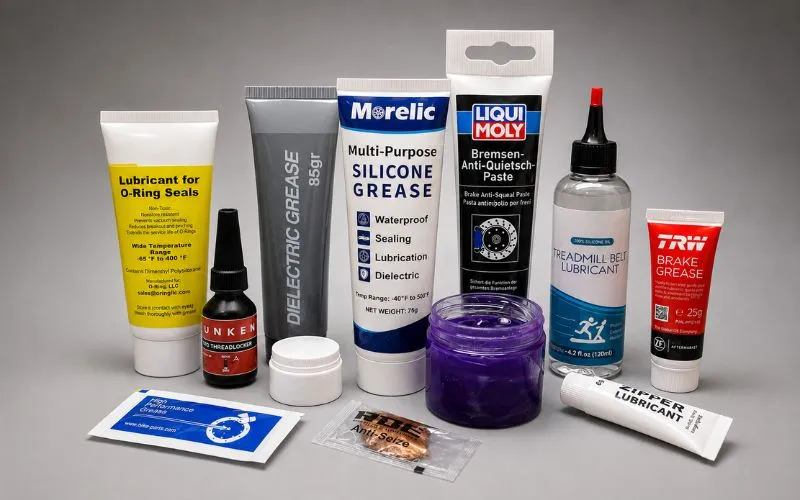
Perfluoropolyether (PFPE) grease represents a specialized class of synthetic lubricants engineered for extreme operating conditions where conventional greases fail. These advanced lubricants combine perfluoropolyether base oils with polytetrafluoroethylene (PTFE) thickeners, delivering unmatched chemical inertness, thermal stability, and longevity in demanding industrial environments. From semiconductor manufacturing to aerospace applications, PFPE grease has become the gold standard for critical lubrication challenges where contamination, extreme temperatures, or aggressive chemicals would rapidly degrade traditional petroleum-based products.
Video Guide: This technical overview explains the fundamental chemistry and unique molecular structure of perfluoroalkylpolyether base oils that make PFPE lubricants exceptionally stable.
What is PFPE Grease?
PFPE grease is a fully fluorinated synthetic lubricant composed of perfluoropolyether base oils thickened with PTFE particles. Unlike conventional greases, PFPE formulations contain no hydrogen or carbon-hydrogen bonds, making them completely non-flammable and resistant to oxidation, chemicals, and extreme temperatures ranging from -75°F to 550°F (-60°C to 288°C).
-grease.webp)
Composition and Structure of PFPE Lubricants
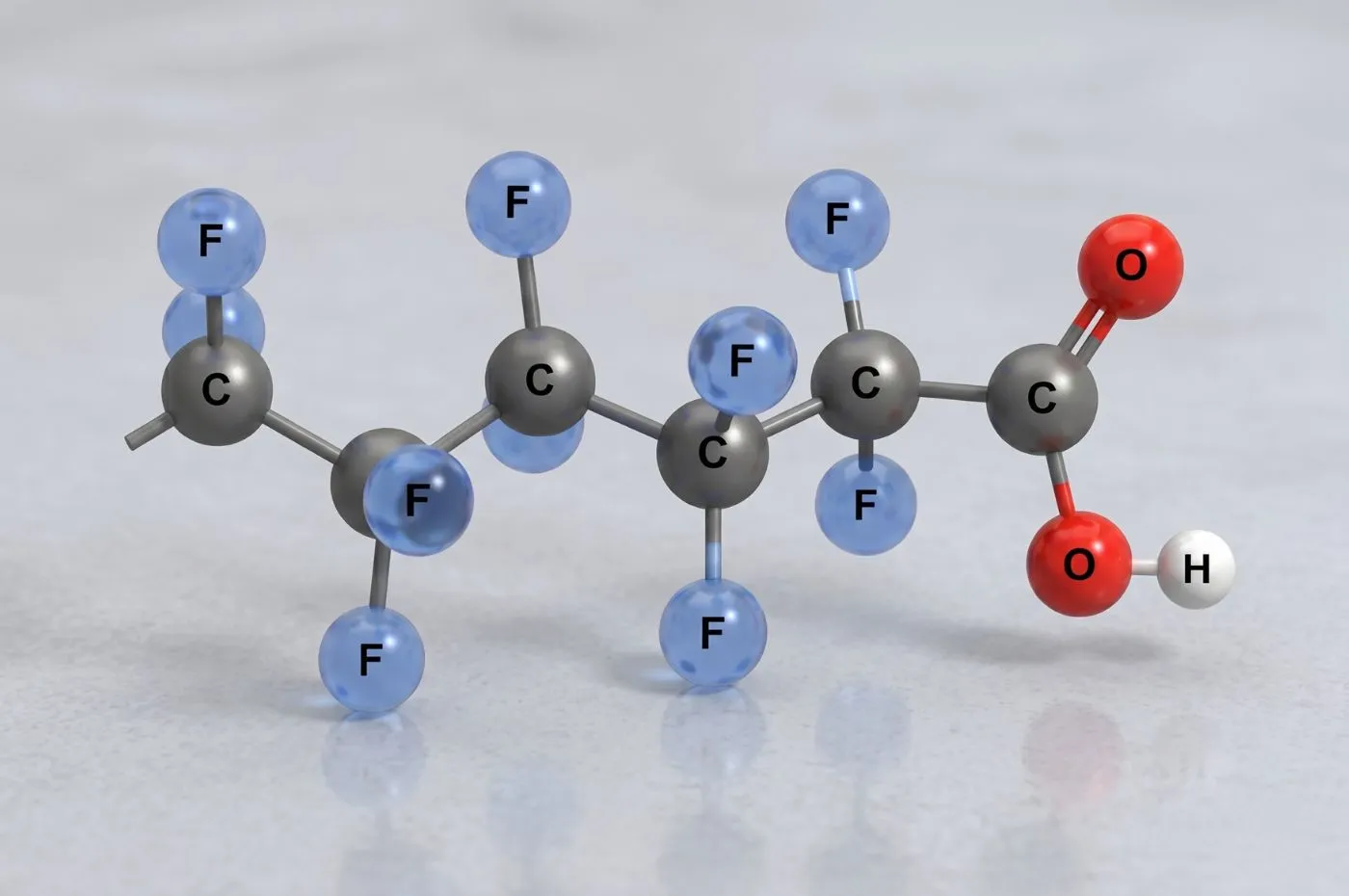
PFPE greases derive their exceptional properties from their unique molecular structure. Unlike hydrocarbon-based lubricants, PFPE molecules consist of carbon, oxygen, and fluorine atoms arranged in chains where fluorine atoms replace all hydrogen positions. This fluorination creates extraordinary stability benefits.
The typical composition includes:
- Base Oil: 70-85% PFPE fluid (perfluorinated polyether)
- Thickener: 15-25% PTFE (polytetrafluoroethylene)
- Additives: 0-5% performance enhancers (corrosion inhibitors, anti-wear compounds)
Based on our internal data and market analysis, here is the breakdown:
| Component | Function | Benefit |
|---|---|---|
| PFPE Base Oil | Primary lubricating fluid | Chemical inertness, wide temperature range, low volatility |
| PTFE Thickener | Provides consistency/structure | Non-reactive carrier, excellent boundary lubrication |
| Performance Additives | Address specific needs | Enhanced corrosion protection, reduced wear |
Morelic Pro Tip: When selecting a PFPE grease, verify its NLGI grade (consistency rating) matches your application requirements. For high-speed bearings, choose NLGI 2 or softer grades, while slow-moving components or sealing applications typically benefit from stiffer NLGI 3 formulations. Remember that PFPE greases should never be mixed with conventional lubricants as this can compromise their performance properties.
How Does PFPE Grease Work?
PFPE grease functions by creating a persistent lubricating film between moving surfaces through its fluorinated molecular structure. The PFPE base oil molecules adhere to metal surfaces while the PTFE thickener maintains the grease structure, preventing metal-to-metal contact even under extreme pressure, temperature fluctuations, or exposure to aggressive chemicals that would destroy conventional lubricants.
Video Guide: This demonstration shows proper bearing cleaning and greasing techniques using Krytox PFPE lubricants, illustrating how PFPE grease protects critical components.
Lubrication Mechanism and Performance Characteristics
The lubrication mechanism of PFPE grease operates through several synergistic processes. At the molecular level, the perfluorinated chains create an ultra-low surface energy film that reduces friction coefficients to remarkably low levels—typically between 0.04 and 0.08 depending on the specific formulation and operating conditions.
When applied to bearing surfaces or mechanical components, PFPE grease forms a protective barrier that prevents corrosion while simultaneously reducing wear. The PTFE thickener particles provide additional anti-wear protection by filling microscopic surface irregularities and creating a smooth, low-friction interface.
Temperature Performance Dynamics:
- Low-Temperature Operation – PFPE molecules remain flexible and mobile down to -75°F, preventing the hardening that immobilizes conventional greases
- High-Temperature Stability – The fluorine-carbon bonds resist thermal decomposition up to 550°F continuous operation
- Thermal Cycling Resistance – Repeated heating and cooling cycles do not cause oil separation or consistency changes
- Flash Point Characteristics – Most PFPE greases exhibit no flash point or fire point due to complete non-flammability
The grease maintains its protective film even when subjected to radiation, vacuum conditions, or corrosive atmospheres. This makes it indispensable for applications where re-lubrication is impossible or prohibitively expensive.
Morelic Pro Tip: During initial application, we’ve found that using slightly more PFPE grease than you would with conventional products compensates for its different flow characteristics. However, avoid over-packing sealed bearings, as PFPE’s excellent longevity means you won’t need to replenish it frequently—excess grease can cause unnecessary churning resistance.
What are the industrial applications of PFPE grease?
PFPE grease serves critical industrial applications including semiconductor manufacturing equipment, aerospace valve systems, chemical processing machinery, oxygen service components, automotive fuel systems, pharmaceutical production lines, and nuclear facility mechanisms. Its chemical inertness and extreme temperature tolerance make it essential where conventional greases would contaminate products, degrade rapidly, or create safety hazards.
Video Guide: This presentation explores PFPE products designed for extreme industrial requirements, showcasing real-world applications where these specialized lubricants solve critical challenges.
Industry-Specific Applications and Requirements
The semiconductor and electronics manufacturing sector relies heavily on PFPE greases for vacuum pump bearings, wafer handling robots, and clean room equipment. Any hydrocarbon contamination from conventional greases would ruin sensitive electronic components, making PFPE’s non-outgassing properties essential. Typical applications include:
- Vacuum pump bearings – Operating in high vacuum environments where conventional lubricants would evaporate
- Plasma etching equipment – Resisting aggressive fluorine and chlorine-based process gases
- Lithography systems – Providing contamination-free lubrication near photoresist materials
- Hard disk drive manufacturing – Preventing particulate contamination in ultra-clean assembly environments
Aerospace and defense applications demand PFPE grease for oxygen systems, landing gear mechanisms, and satellite components. The grease’s oxygen compatibility prevents catastrophic fires in LOX/GOX environments, while its radiation resistance ensures reliable operation in space applications.
Chemical processing industries use PFPE grease for valve stems, pump seals, and agitator bearings exposed to acids, bases, solvents, and oxidizers. A single grease formulation can often handle multiple chemical exposures, simplifying inventory management.
Automotive applications have expanded beyond traditional uses to include:
- Electric vehicle battery cooling system valves
- Fuel injection system components
- Exhaust gas recirculation (EGR) valves operating at 400°F+
- Turbocharger bearings experiencing extreme thermal cycling
Morelic Pro Tip: When specifying PFPE grease for chemical applications, we always request compatibility data specific to your process chemicals. While PFPE resists most substances, certain highly aggressive fluorinating agents or molten alkali metals may still cause degradation—better to verify compatibility before a costly failure.
What is PFPE material?
PFPE (perfluoropolyether) material is a synthetic fluoropolymer consisting entirely of carbon, fluorine, and oxygen atoms arranged in a polyether backbone. This fully fluorinated structure eliminates all hydrogen atoms, creating a chemically inert, thermally stable polymer that resists degradation from oxidation, radiation, chemicals, and extreme temperatures—properties impossible to achieve with hydrocarbon-based materials.
Molecular Structure and Variants
PFPE materials exist in several structural configurations, each offering distinct performance characteristics. The three primary molecular architectures include:
Linear PFPE Structure: Features a straight-chain backbone with repeating -CF₂-O- and -CF(CF₃)-O- units. This configuration provides excellent low-temperature fluidity and is commonly used in precision bearing applications.
Branched PFPE Structure: Incorporates side-chain fluoroalkyl groups that enhance load-carrying capacity and film strength. These formulations excel in high-pressure applications like gearboxes and heavily loaded bearings.
Cyclic PFPE Structure: Contains ring structures within the polymer chain, offering superior thermal stability and reduced volatility for extreme high-temperature applications.
Manufacturing processes produce PFPE materials through controlled polymerization of fluorinated monomers. The molecular weight distribution significantly impacts performance—lower molecular weight PFPEs (1,000-3,000 Da) function as thin oils for light lubrication, while higher molecular weights (5,000-15,000 Da) serve as grease base oils.
Key Material Properties:
- Density: 1.85-1.95 g/cm³ (significantly higher than hydrocarbon oils)
- Viscosity Index: 80-400 (exceptional viscosity-temperature stability)
- Pour Point: -75°F to -40°F depending on molecular weight
- Thermal Decomposition: Begins above 600°F in inert atmospheres
- Dielectric Strength: Excellent electrical insulation properties
- Surface Tension: Extremely low, providing superior wetting and penetration
Morelic Pro Tip: The molecular weight of PFPE base oil directly affects grease performance—we’ve observed that applications involving fine-pitch gears or high-speed bearings benefit from lower viscosity PFPE oils (around 100-150 cSt at 40°C), while heavily loaded slow-speed applications perform better with higher viscosity grades (300-500 cSt at 40°C).
What are the properties and application of lubricants?
Lubricant properties determine application suitability through viscosity, thermal stability, load-carrying capacity, oxidation resistance, and compatibility with materials. PFPE lubricants specifically offer superior chemical inertness, non-flammability, extreme temperature range (-75°F to 550°F), minimal outgassing, oxygen compatibility, and radiation resistance—properties that enable applications in semiconductor manufacturing, aerospace, chemical processing, and other demanding environments where conventional lubricants fail.
Video Guide: This explanation of grease compatibility principles helps understand why PFPE’s unique chemical structure makes it compatible with virtually all materials while incompatible with conventional greases.
Critical Performance Properties
Understanding lubricant properties requires examining both fundamental characteristics and application-specific requirements. PFPE lubricants demonstrate exceptional performance across multiple parameters:
Viscosity and Flow Characteristics: PFPE base oils maintain consistent viscosity across extreme temperature ranges due to their high viscosity index. Unlike petroleum oils that thicken dramatically at low temperatures or thin excessively when heated, PFPE maintains predictable flow properties. This consistency ensures reliable lubrication whether equipment starts at -40°F or operates continuously at 450°F.
Oxidation and Thermal Stability: The absence of carbon-hydrogen bonds eliminates oxidation pathways that degrade conventional lubricants. Laboratory testing shows PFPE greases maintaining their original properties after 10,000+ hours at 500°F, while mineral oil greases carbonize within hours at similar temperatures.
Load-Carrying and Anti-Wear Properties: PFPE greases achieve excellent load capacity through multiple mechanisms:
- Film strength – The fluorinated molecules create durable boundary lubrication films
- PTFE reinforcement – Submicron PTFE particles provide solid lubrication when oil films compress
- Surface passivation – PFPE chemically passivates metal surfaces, preventing corrosion-induced wear
- Pressure resistance – Maintains lubrication at contact pressures exceeding 500,000 PSI
Chemical Compatibility Applications: PFPE’s universal chemical resistance enables use with acids (pH 0-2), bases (pH 12-14), organic solvents, oxidizers, fuels, hydraulic fluids, and cleaning agents. This property proves invaluable in multi-chemical environments where conventional greases would swell, dissolve, or harden.
Morelic Pro Tip: When transitioning from conventional grease to PFPE, we always recommend complete removal of the old lubricant—PFPE is incompatible with petroleum and synthetic hydrocarbon greases. Mixing even small amounts can compromise PFPE’s performance. Use appropriate fluorinated solvents or dedicated cleaning procedures to ensure complete changeover.
Key Features & Comparison
| Feature | PFPE Grease | Synthetic Hydrocarbon Grease | Mineral Oil Grease | Silicone Grease |
|---|---|---|---|---|
| Temperature Range | -75°F to 550°F (-60°C to 288°C) | -40°F to 350°F (-40°C to 177°C) | -20°F to 250°F (-29°C to 121°C) | -40°F to 400°F (-40°C to 204°C) |
| Chemical Resistance | Excellent – Universal inertness | Moderate – Limited acid/solvent resistance | Poor – Degrades with most chemicals | Good – Resists some chemicals |
| Oxygen Compatibility | Yes – LOX/GOX safe | No – Fire/explosion hazard | No – Fire/explosion hazard | No – Fire/explosion hazard |
| Outgassing (Vacuum) | Minimal – <1% TML | Moderate – 3-8% TML | High – 10-20% TML | Low – 1-3% TML |
| Oxidation Resistance | Excellent – No degradation | Good – Requires antioxidants | Poor – Rapid oxidation | Good – Inherently stable |
| Radiation Resistance | Excellent – Stable to 10⁷ rads | Moderate – Degrades above 10⁵ rads | Poor – Degrades above 10⁴ rads | Moderate – Degrades above 10⁵ rads |
| Water Resistance | Excellent – Complete repellency | Good – Some emulsification | Poor – Readily washes out | Excellent – Complete repellency |
| Load Capacity | Very Good – With PTFE additives | Excellent – With EP additives | Good – Standard applications | Fair – Limited load capacity |
| Cost (Relative) | Very High – 10-50x baseline | Medium – 2-5x baseline | Baseline – 1x | Medium – 2-4x baseline |
| Service Life | Exceptional – 5-10+ years | Good – 2-5 years | Moderate – 1-3 years | Good – 2-4 years |
| Typical Applications | Semiconductor, aerospace, chemical | Automotive, industrial bearings | General machinery, low-demand | Electrical, plastic/rubber contact |
Performance Differentiation Analysis:
The comparison reveals PFPE grease occupies a unique position where extreme conditions justify premium pricing. While conventional greases cost $5-15 per pound, PFPE formulations range from $150-500 per pound depending on purity and packaging. This 10-50x cost differential makes economic sense only when:
- Failure consequences exceed lubricant cost – Satellite bearings, pharmaceutical cleanroom systems, semiconductor vacuum equipment, or oxygen service valves where downtime, contamination, or ignition risks could result in losses measured in millions.
- Extreme environments exceed conventional limits – Applications involving ultra-high vacuum, aggressive chemicals (strong acids, oxidizers), high radiation exposure, or continuous operation above 250 °C where hydrocarbon and silicone greases rapidly degrade.
- Maintenance access is limited or impossible – Aerospace actuators, sealed-for-life bearings, nuclear installations, or subsea equipment where relubrication is impractical and long service life is mandatory.
- Regulatory or safety compliance is critical – LOX/GOX systems, medical device components, and clean manufacturing environments requiring nonflammability, ultra-low outgassing, and chemical inertness.
- Total cost of ownership (TCO) favors longevity – In high-value capital equipment, extended relubrication intervals and reduced component replacement can offset the higher upfront lubricant cost over a 5–10+ year lifecycle.
Morelic Pro Tip: PFPE grease is not a “better general-purpose grease.” It is a risk-mitigation lubricant designed for environments where conventional chemistries fail predictably.
For standard industrial applications—automotive bearings, gearboxes, general machinery—synthetic hydrocarbon or mineral oil greases typically deliver the best cost-performance balance.
However, when heat + oxygen + vacuum + chemicals + radiation converge, PFPE becomes not a premium option—but often the only technically viable solution.
Conclusion
PFPE grease is not a general-purpose lubricant, but a specialized solution for applications involving extreme temperatures, aggressive chemicals, vacuum, oxygen-rich environments, or long service intervals.
Selecting the right PFPE grease depends on factors such as base oil viscosity, NLGI grade, operating temperature, speed, load, and chemical exposure.
For demanding industrial applications where conventional greases cannot provide reliable performance, PFPE grease can offer exceptional stability, cleanliness, and long-term lubrication.
Need help selecting the right PFPE grease? Explore Morelic PFPE Grease or contact our technical team for application support.