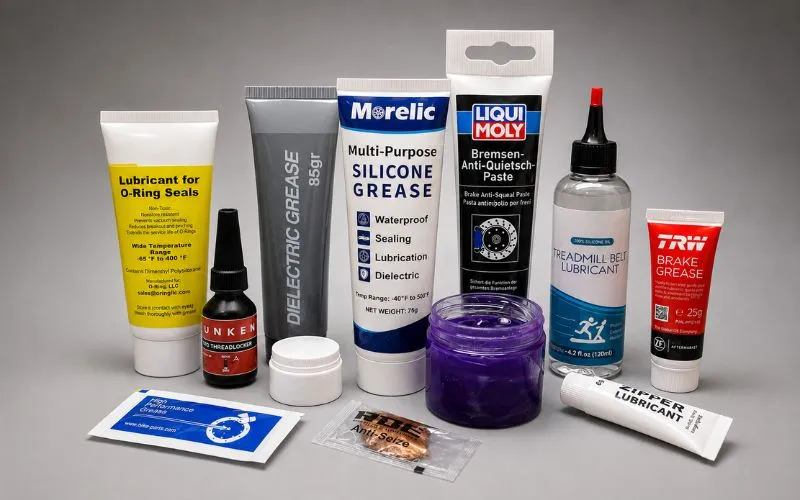
With increasing regulatory scrutiny on per- and polyfluoroalkyl substances (PFAS), manufacturers and engineers are seeking clarity on whether perfluoropolyether (PFPE) lubricants fall under this classification. This distinction has significant implications for compliance, environmental impact, and long-term industrial planning as regulations evolve worldwide.
Video Guide: This video explains the fundamentals of Perfluoroalkylpolyether base oils (PFPEs) and their chemical composition.
What is PFPE Grease?
PFPE (Perfluoropolyether) grease is a synthetic lubricant composed of fluorine-substituted carbon chains with oxygen linkages, creating an exceptionally stable compound. These specialized greases offer outstanding chemical resistance, thermal stability, and non-flammability, making them ideal for extreme environments where conventional lubricants would quickly degrade or fail.
Video Guide: This video demonstrates PFPE products designed for extreme requirements and their industrial applications.
Is PFPE a PFAS?
Technically, PFPE (Perfluoropolyether) is classified as a PFAS (Per- and Polyfluoroalkyl Substances) under most regulatory definitions because it contains perfluorinated carbon chains.
However, most regulatory actions currently target low-molecular-weight PFAS such as PFOS, PFOA, and GenX—NOT high-molecular-weight PFPE polymers used in lubricants.
PFPEs have distinct properties that differentiate them from many concerning PFAS compounds, including higher molecular weight, exceptional stability, and significantly different environmental behavior.
Video Guide: This video explores the lifecycle of fluoropolymers from production to end-of-life, addressing environmental considerations.
Regulatory Classification and Environmental Considerations
The classification of PFPE as a PFAS has important regulatory implications, though the scientific community and regulatory bodies increasingly recognize distinctions within the broad PFAS family. Understanding these nuances is critical for manufacturers and engineers navigating compliance requirements.
Key distinctions between PFPE and concerning PFAS compounds:
- Environmental Persistence: While PFPEs are persistent (as are all PFAS), they have extremely low mobility due to high molecular weight
- Bioaccumulation Potential: High-molecular-weight PFPEs show minimal bioaccumulation compared to PFOS or PFOA
- Toxicity Profile: Studies indicate significantly lower toxicity concerns for PFPEs compared to many other PFAS
- Containment: PFPEs are typically used in closed systems with controlled disposal
- Essential Use: Many PFPE applications have no viable alternatives for critical industries
Under most regulatory frameworks, here is the breakdown:
| Characteristic | PFPE Lubricants | PFOS/PFOA (Concerning PFAS) |
|---|---|---|
| Molecular Weight | 2,000-10,000 Da | 400-600 Da |
| Water Solubility | Extremely low | Higher (especially for shorter chains) |
| Bioaccumulation | Minimal due to size | Significant concern |
| Mobility in Environment | Limited by size | Highly mobile |
| Regulatory Status | Generally exempt from many restrictions | Heavily restricted/banned |
| Degradability | Extremely stable (pro for safety, con for persistence) | Extremely stable but more bioavailable |
Morelic Pro Tip: When documenting your lubricant usage for regulatory compliance, maintain detailed records of PFPE applications, volumes, and containment measures. We recommend creating a specific PFPE management protocol that demonstrates responsible use and disposal practices. This proactive approach has helped our clients navigate regulatory discussions by demonstrating that their PFPE usage represents contained, essential applications with minimal environmental risk.
What states have banned biosolids?
Currently, Maine has enacted the most comprehensive ban on biosolids containing PFAS, prohibiting land application of sewage sludge that exceeds specific PFAS thresholds. Michigan, New Hampshire, and Wisconsin have implemented strict limitations rather than outright bans. Several other states including California, Minnesota, and New York have established aggressive testing requirements and are developing regulatory frameworks that may lead to partial or conditional bans.
Video Guide: This video covers PFAS regulations and treatment challenges that engineers face, including state-level biosolid restrictions.
State-Level Regulatory Landscape
The regulation of biosolids containing PFAS compounds is evolving rapidly across the United States, creating a complex compliance landscape for manufacturers and wastewater treatment facilities. While not directly related to PFPE lubricants in most cases, these regulations reflect the broader regulatory approach to fluorinated compounds.
Based on publicly available state legislation, here is the breakdown:
| State | Current Biosolid Regulation Status | PFAS Threshold | Implementation Timeline |
|---|---|---|---|
| Maine | Complete ban on biosolids exceeding thresholds | 2.5 ppb for PFOA, 5.2 ppb for PFOS | Fully implemented |
| Michigan | Screening levels and land application restrictions | 16 ppb for PFOS+PFOA combined | Phased implementation |
| New Hampshire | Strict testing and limited application | 5.2 ppb for PFOS, 4.3 ppb for PFOA | Testing phase, restrictions pending |
| Wisconsin | Risk-based screening values | 20 ppt for PFOS, 20 ppt for PFOA in groundwater | Ongoing implementation |
| California | Testing requirements with restrictions pending | Under development | 2023-2024 implementation |
| Minnesota | Monitoring program with site restrictions | 15 ppt for PFOS in soil | Phased approach |
| New York | Advanced monitoring with restrictions in development | Under review | Proposed for 2023-2024 |
While biosolid bans mainly affect wastewater management, they illustrate how PFAS regulation is expanding across industries—including lubricant manufacturing.
Applications of PFAS
PFAS are widely used across industries including aerospace, semiconductor manufacturing, automotive systems, and electronics.
Video Guide: This video examines PFAS risks, regulations, and the industries that utilize these chemicals in their products and processes.
Industry Applications and Major Players
PFAS compounds, including specialized PFPE lubricants, are used across numerous sectors due to their unique properties. Understanding which industries and companies rely on these materials helps engineers and manufacturers anticipate regulatory impacts and supply chain considerations.
Under most regulatory frameworks, here is the breakdown:
| Industry Sector | PFAS/PFPE Applications | Major Companies |
|---|---|---|
| Aerospace | High-temperature lubricants, hydraulic fluids, O-ring seals | Boeing, Airbus, Lockheed Martin, NASA |
| Semiconductor | Vacuum pump fluids, clean room lubricants | Intel, Samsung, TSMC, Applied Materials |
| Automotive | Specialized bearings, electrical contacts, fuel systems | Ford, Toyota, Bosch, Continental |
| Chemical Processing | Valve seals, pump lubricants, reactor components | BASF, Dow, ExxonMobil, Shell |
| Food Processing | Non-stick coatings, conveyor systems | Nestle, Kraft Heinz, JBS, Tyson Foods |
| Medical Devices | Implantable components, diagnostic equipment | Medtronic, Johnson & Johnson, Stryker |
| Military/Defense | Oxygen systems, weapons lubricants, electronics | Raytheon, General Dynamics, BAE Systems |
| Electronics | Hard disk lubricants, switch contacts | Apple, HP, Seagate, Western Digital |
Morelic Pro Tip: When qualifying suppliers for PFPE lubricants, we recommend requesting detailed Environmental Product Declarations (EPDs) that specifically address PFAS regulatory compliance. This documentation can protect your supply chain from disruption as regulations evolve. In our experience, suppliers with transparent documentation and proactive regulatory monitoring typically offer more stable long-term partnerships.
Cost & Buying Factors
PFPE greases typically cost between $150-$800 per kilogram depending on grade, formulation, and quantity—roughly 15-20 times more expensive than conventional lubricants. This premium pricing reflects their specialized manufacturing process, extensive testing requirements, and the high-purity fluorine compounds required for production. Despite the cost, their extended service life and reliability in extreme conditions often deliver superior total cost of ownership in critical applications.
Video Guide: This video clearly explains “forever chemicals” including PFAS compounds, helping buyers understand the environmental factors that influence purchasing decisions.
Key Purchasing Considerations
When evaluating PFPE greases for industrial applications, several factors beyond the initial purchase price should inform the selection process. Understanding these considerations helps engineers and procurement specialists make cost-effective decisions that balance performance requirements with budget constraints.
In high-reliability environments, the extended service interval and failure prevention often offset the initial material premium.
Based on our internal data and market analysis, here is the breakdown:
| Purchasing Factor | Considerations | Impact on Selection |
|---|---|---|
| Temperature Range | Application min/max temperatures | Determines required base oil grade and thickener system |
| Chemical Environment | Exposure to solvents, acids, reactive gases | Influences need for inert PFPE formulation |
| Relubrication Interval | Desired maintenance cycle length | Longer intervals justify higher upfront cost |
| Load & Speed | Bearing type and operating speed | Affects viscosity grade and thickener choice |
| Regulatory Compliance | PFAS reporting requirements, regional laws | Impacts documentation and supplier selection |
| Certification Needs | NSF, aerospace, semiconductor approvals | Limits supplier options |
| Total Cost of Ownership | Downtime risk, replacement cost, failure cost | Often outweighs material price difference |
Final Thoughts: Is PFPE Grease Worth It?
PFPE grease sits at the intersection of extreme performance and evolving environmental regulation. While technically classified within the broad PFAS family, high-molecular-weight PFPE lubricants differ significantly from restricted PFAS compounds such as PFOS and PFOA in terms of mobility, bioaccumulation, and application exposure.
For most industrial users, the key question is not whether PFPE is a PFAS—but whether its performance benefits justify its premium cost under current and future regulatory frameworks.
In mission-critical environments such as semiconductor fabrication, aerospace systems, oxygen service, and chemically aggressive processing plants, PFPE lubricants often remain the only technically viable option.
Frequently Asked Questions
Is PFPE grease regulated or restricted?
PFPE grease is not broadly prohibited in most industrial applications at the time of writing. Regulatory approaches differ by region, and compliance requirements may depend on product composition, reporting thresholds, and local environmental policies.
Why is PFPE grease more expensive?
PFPE grease typically carries a higher cost due to specialized fluorinated raw materials, controlled manufacturing processes, and performance characteristics designed for extreme operating conditions and extended maintenance intervals.
Are PFAS regulations changing in the United States?
Yes. PFAS regulations are evolving at both federal and state levels. Requirements may include reporting, monitoring, or application-specific restrictions, depending on jurisdiction and the specific chemical substances involved.
Do PFPE lubricants pose environmental risks?
PFPE lubricants are chemically stable and generally used in controlled industrial systems. Environmental considerations depend on application, handling practices, and regional regulatory standards governing fluorinated substances.