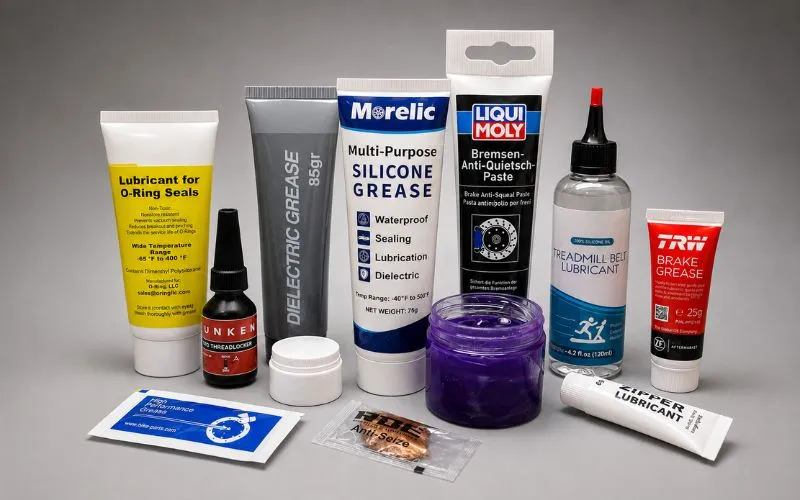
Choosing the right brake grease protects caliper hardware, stops squeaks, and preserves rubber components. For most brake jobs, use high‑temperature, non‑petroleum lubricants: silicone-based on slide pins and boots; ceramic-based on pad backs and abutment clips; and a small amount of nickel/ceramic anti‑seize on hub faces. Apply sparingly—never on friction surfaces—and follow manufacturer torque specs.
Video Guide: A concise overview of which brake lubes work best and where to apply them.
What is brake grease?
Brake grease is a high‑temperature, moisture‑resistant lubricant engineered for brake assemblies. It prevents corrosion, reduces vibration-induced noise, and keeps moving parts—like brake caliper slide pins—free. Formulations are rubber-safe (often silicone or synthetic) and may include ceramic solids for metal contact points. It is never applied to friction surfaces.
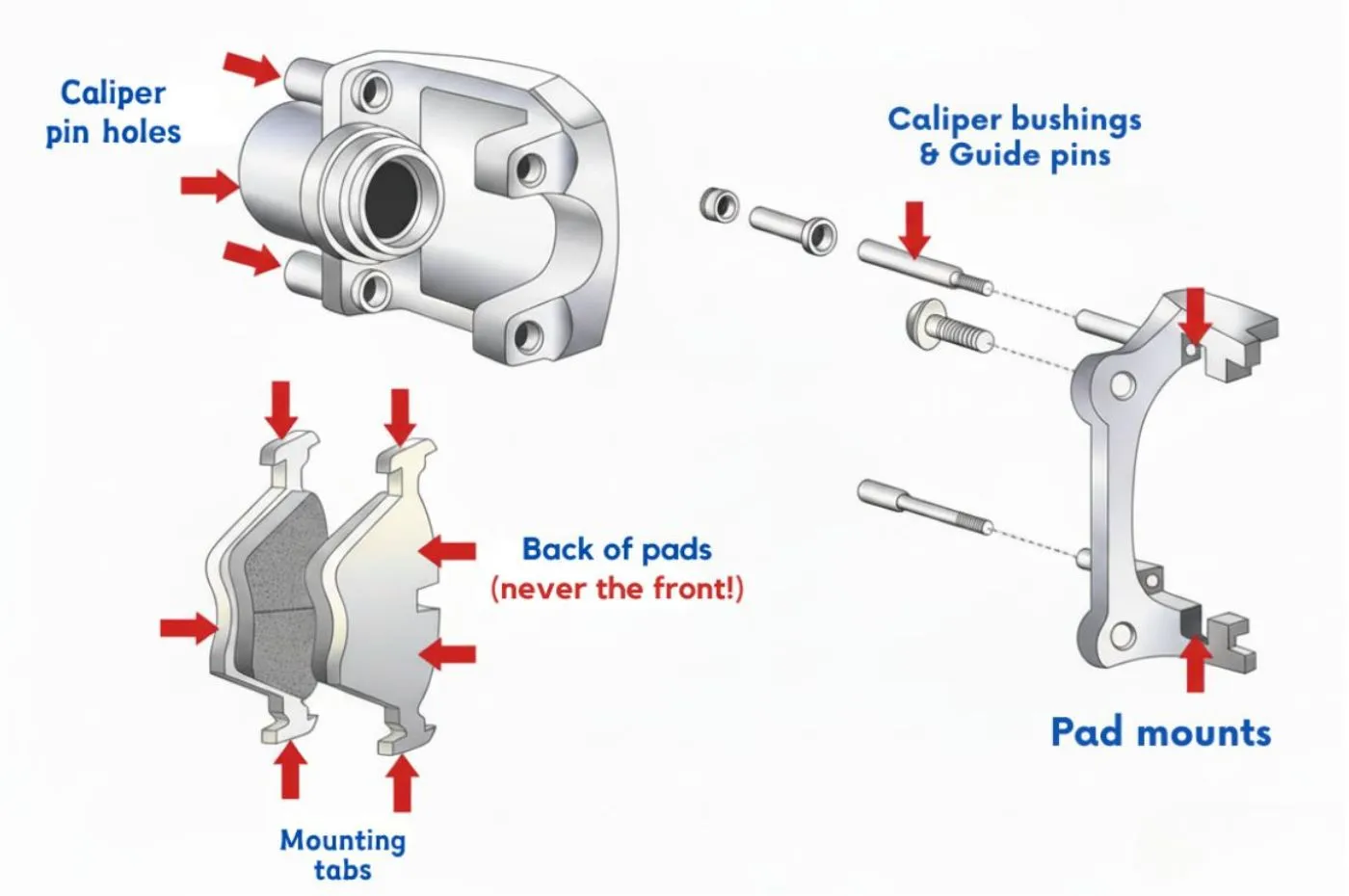
Formulations and materials
Based on our internal data and market analysis, here is the breakdown:
| Type | Temperature Capability | Rubber Compatibility | Typical Use | Pros | Cautions |
|---|---|---|---|---|---|
| Silicone caliper grease | ~ -40°F to 400–500°F | Excellent (EPDM-safe) | Slide pins, rubber boots, seals | Won’t swell EPDM; water/salt resistant | Avoid on high-pressure metal interfaces needing solid lubricity |
| Ceramic brake lubricant | Up to 1800–3000°F (short exposure) | Good (check datasheet) | Pad backs, shims, abutment clips | High-temp stability; damping for NVH | Keep away from rubber if not specified rubber-safe |
| Synthetic ester/glycol blends | ~ -40°F to 500°F | Often EPDM-safe | General caliper hardware | Stable film; corrosion inhibitors | Verify rubber compatibility |
| Moly/graphite paste | ~ -40°F to 600°F | Not rubber-safe | Metal-to-metal sliding interfaces | Excellent boundary lubrication | Keep off any rubber/plastic; can stain |
| Nickel anti-seize | ~ -40°F to 2400°F | Not rubber-safe | Hub-to-rotor interface (thin film) | Prevents rotor hub seizure | Conductive; avoid near ABS sensors; not for pins |
Ceramic brake lubricant:High temperature ratings usually refer to solid lubricants (ceramic particles), not continuous operating temperature.
Nickel anti-seize: Especially avoid excess anti-seize on wheel hub areas where magnetic ABS tone rings or sensors are nearby.
Morelic Pro Tip: Read the datasheet first: if it doesn’t explicitly say “EPDM/rubber safe,” don’t use it on slide pins or boots. Silicone caliper grease is the safest default for rubber-contact areas—ceramic lube is ideal for metal hardware and pad backs.
How Does brake Lubricant Work?
Brake grease forms a stable, high‑temp boundary film, lowering friction at contact points and damping vibrations that cause brake squeal. It seals out water and road salt, slows corrosion, and keeps caliper slide pins moving freely. Proper application ensures even pad wear, consistent braking feel, and longer component life without contaminating friction surfaces.
Video Guide: A tour of key greasing points across the brake system and how lube improves function.
Where and why it works in the brake assembly
- Caliper slide pins: Minimizes stiction so the caliper centers; silicone grease protects EPDM boots.
- Abutment clips: Ceramic lube prevents metal fretting and reduces squeal at pad ears.
- Pad backing plates/shims: A thin ceramic layer damps vibration between pad and caliper/piston.
- Hub-to-rotor face: A whisper-thin nickel/ceramic anti‑seize prevents future rotor seizure.
- Bleeder screws/threads (sparingly): Prevents galling; keep away from fluid passages.
- Guide sleeves/bushings: Maintains smooth, uniform caliper movement.
Morelic Pro Tip: Clean first, lube second. Remove rust and scale with a wire brush, then apply a thin, even coat. Over‑lubing can attract debris and cause binding—less is more.
What type of grease to use on brakes?
Use silicone caliper grease on slide pins, guide sleeves, and rubber boots. Apply ceramic brake lubricant on pad backs, shims, and abutment clips for high‑temp NVH control. Reserve nickel/ceramic anti‑seize for a thin film on hub faces. Avoid petroleum chassis or bearing grease anywhere in the brake assembly, especially near EPDM rubber.
Video Guide: Why correct brake grease selection is critical and which products to use.
Recommended products by application
- Slide pins and rubber boots: Silicone caliper grease (EPDM-safe, water/salt resistant).
- Pad backs and shims: Ceramic brake lubricant (high-temp, vibration damping).
- Abutment clips/pad ears: Ceramic brake lubricant (thin film on clean metal).
- Hub-to-rotor interface: Nickel or ceramic anti‑seize (very thin coat; avoid rotor faces).
- Bleeder screw threads: Small dab of anti‑seize; keep out of passage.
If you remember nothing else:
- Rubber involved? → Silicone caliper grease
- Pad backs / clips? → Ceramic brake lubricant
- Rust-prone hub face? → Thin anti-seize only
Morelic Pro Tip: Don’t mix greases on the same interface. If you switch types, clean back to bare metal/rubber so chemistry and viscosity stay predictable.
Can you use regular grease for caliper grease?
No. Regular chassis or bearing grease is typically petroleum-based and will swell or degrade EPDM rubber boots, gumming slide pins and causing caliper bind. It also breaks down at brake temperatures. Always use dedicated silicone caliper grease designed for EPDM compatibility and high-heat stability.
Material compatibility and failure risks
Based on industry data and common brake service practices, here is the breakdown:
| Grease Type | EPDM Rubber Safety | Typical Temp Limit | Risks When Misused | Outcome |
|---|---|---|---|---|
| Regular chassis/bearing | Poor | ~250–300°F | Swells boots; dissolves rubber; attracts grime | Sticking pins, uneven wear, brake pull |
| Silicone caliper grease | Excellent | ~400–500°F | Minimal if used thinly | Smooth pin movement, longer hardware life |
| Ceramic brake lubricant | Good (varies) | 1800–3000°F (short) | On rubber: potential incompatibility | Ideal on metal hardware; check rubber safety |
High temperature ratings usually refer to solid lubricants (ceramic particles), not continuous operating temperature.
Morelic Pro Tip: If you’re unsure about an existing grease, dab a tiny amount on a discarded EPDM boot. Swelling, softening, or tackiness after an hour means it’s not rubber-safe.
Is there a difference between brake grease and regular grease?
Yes. Brake grease is engineered for high heat, water/salt exposure, and NVH control, and many formulations are safe for EPDM rubber. Regular greases are petroleum-based, lower temp, and often incompatible with brake materials. Using the wrong grease leads to swollen boots, seized pins, noise, and uneven pad wear.
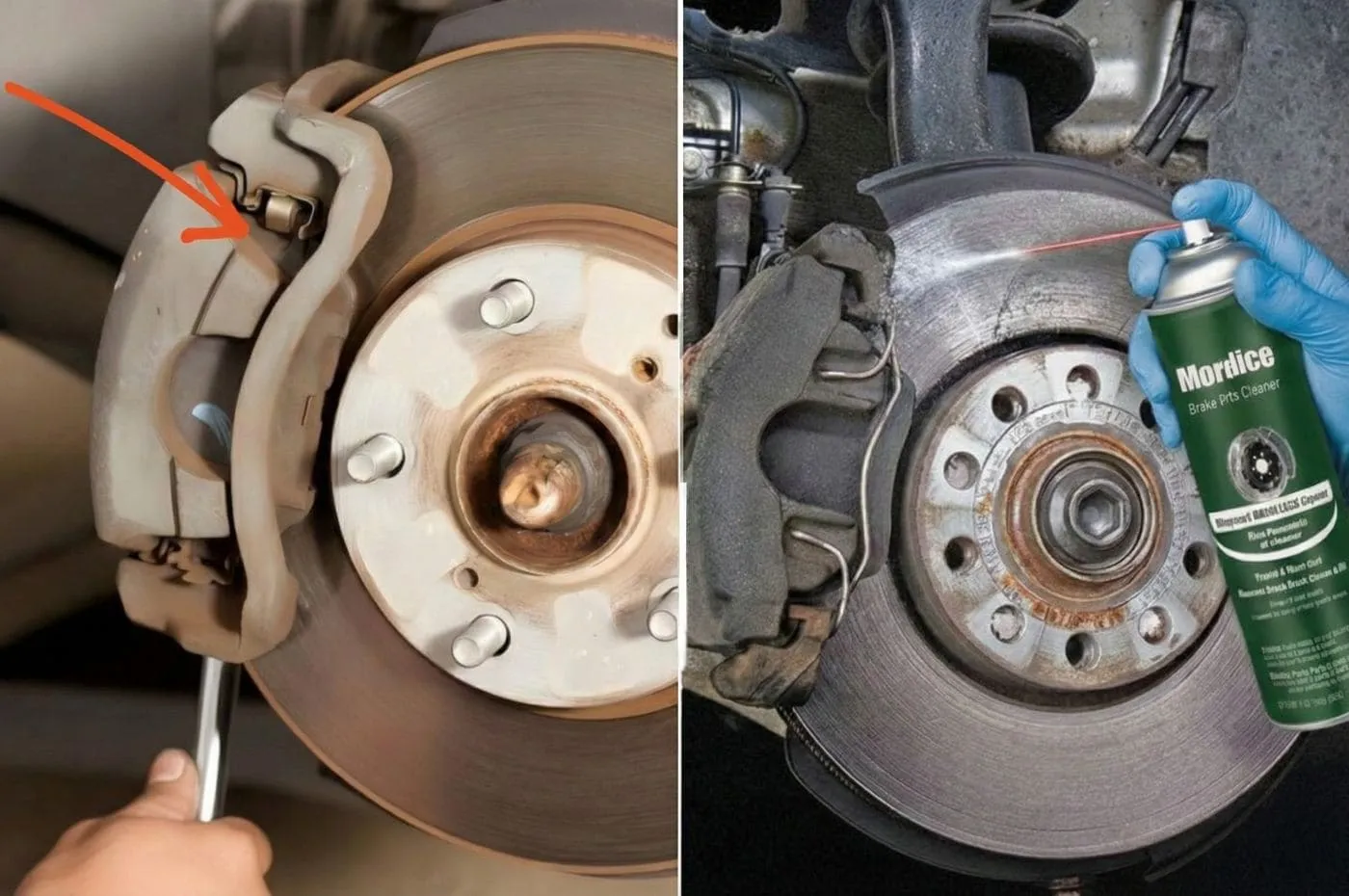
Key property differences
- Temperature stability: Brake lubes resist fade and coking at sustained high temps.
- Rubber compatibility: Silicone/some synthetics are EPDM-safe; regular grease is not.
- Corrosion resistance: Brake lubes include inhibitors for wet, salted environments.
- NVH performance: Ceramic lubricants damp vibrations and reduce squeal.
- Conductivity: Anti‑seize is conductive; silicone lube is non-conductive—important near sensors.
- Longevity: Purpose-made brake lubes maintain film under heat cycling and wash exposure.
Morelic Pro Tip: When in doubt, match the lube to the interface: rubber contact = silicone; high-heat metal contact = ceramic; seize-prone threads or hubs = nickel/ceramic anti‑seize (thin only).
Key Features & Comparison
Selecting brake grease hinges on temperature tolerance, rubber safety, corrosion resistance, and NVH reduction. Silicone caliper grease excels for pins/boots; ceramic lube shines on pad backs and clips; anti‑seize prevents hub seizure. Pair the product to the interface, and apply sparingly to keep brakes quiet, safe, and serviceable.
Brake lube category comparison
Based on our internal data and market analysis, here is the breakdown:
| Category | Best For | Temp Range | Rubber Safety | NVH Control | Conductive | Notable Drawbacks |
|---|---|---|---|---|---|---|
| Silicone caliper grease | Pins, sleeves, boots | -40°F to 400–500°F | Excellent (EPDM) | Moderate | No | Lower solid lubricity vs. moly on hard metal slides |
| Ceramic brake lubricant | Pad backs, shims, abutment clips | Up to 1800–3000°F (short) | Varies by product | High | No | Some not rubber-safe; read label |
| Synthetic ester/glycol | General caliper hardware | -40°F to ~500°F | Often EPDM-safe | Moderate | No | Verify compatibility; can wash off if over-applied |
| Nickel anti‑seize | Hub faces, select threads | -40°F to ~2400°F | Not rubber-safe | Low | Yes | Conductive; messy; avoid sensors and friction areas |
Ceramic brake lubricant: High temperature ratings usually refer to solid lubricants (ceramic particles), not continuous operating temperature.
Morelic Pro Tip: Match performance to need. If your environment sees road salt and wash cycles, prioritize water resistance. For track use, favor ceramic on hardware but keep silicone for rubber contact.
Cost & Buying Factors
Expect $6–$15 for small packets/tubes and $12–$25 for 8–16 oz shop-sized containers. Silicone caliper grease typically costs slightly more per ounce than generic chassis grease, but saves hardware. Look for explicit EPDM compatibility, high-temp ratings, corrosion inhibitors, and convenient applicators (brush-cap or needle-tip).
Price ranges and what to look for
Based on OEM service guidelines and market products, here is the breakdown:
| Type | Packaging | Typical Price | Approx. Cost/oz | Best Use | Notes |
|---|---|---|---|---|---|
| Silicone caliper grease | 8 oz jar (brush-cap) | $14–$20 | $1.75–$2.50 | Pins/boots | Brush-cap improves control; EPDM-safe |
| Ceramic brake lubricant | 8–16 oz tub | $16–$25 | $1.00–$2.00 | Pad backs/abutment clips | Check rubber safety; high-temp NVH damping |
| Nickel anti‑seize | 8 oz jar | $12–$18 | $1.50–$2.25 | Hub faces/threads (thin film) | Keep off sensors; conductive |
| Single-use packets | 0.5–1 oz | $1.50–$4.00 | $3.00–$8.00 | One-time jobs | Handy, less waste; higher per‑oz cost |
Morelic Pro Tip: If you service multiple cars, buy the brush-cap jar—precision saves time and prevents over-application. For occasional DIY, packets ensure fresh, uncontaminated lube every job.
Conclusion
Use silicone caliper grease on any rubber‑contact parts and ceramic brake lubricant on pad backs and metal hardware; add a thin nickel/ceramic anti‑seize on hub faces. Clean surfaces, apply sparingly, and never lube friction areas. Following these basics keeps brakes quiet, safe, and serviceable across seasons.
Choosing the correct brake system grease—silicone for caliper pins, ceramic for pad hardware, and anti-seize for hub faces—is critical for brake safety, noise control, and long-term reliability.
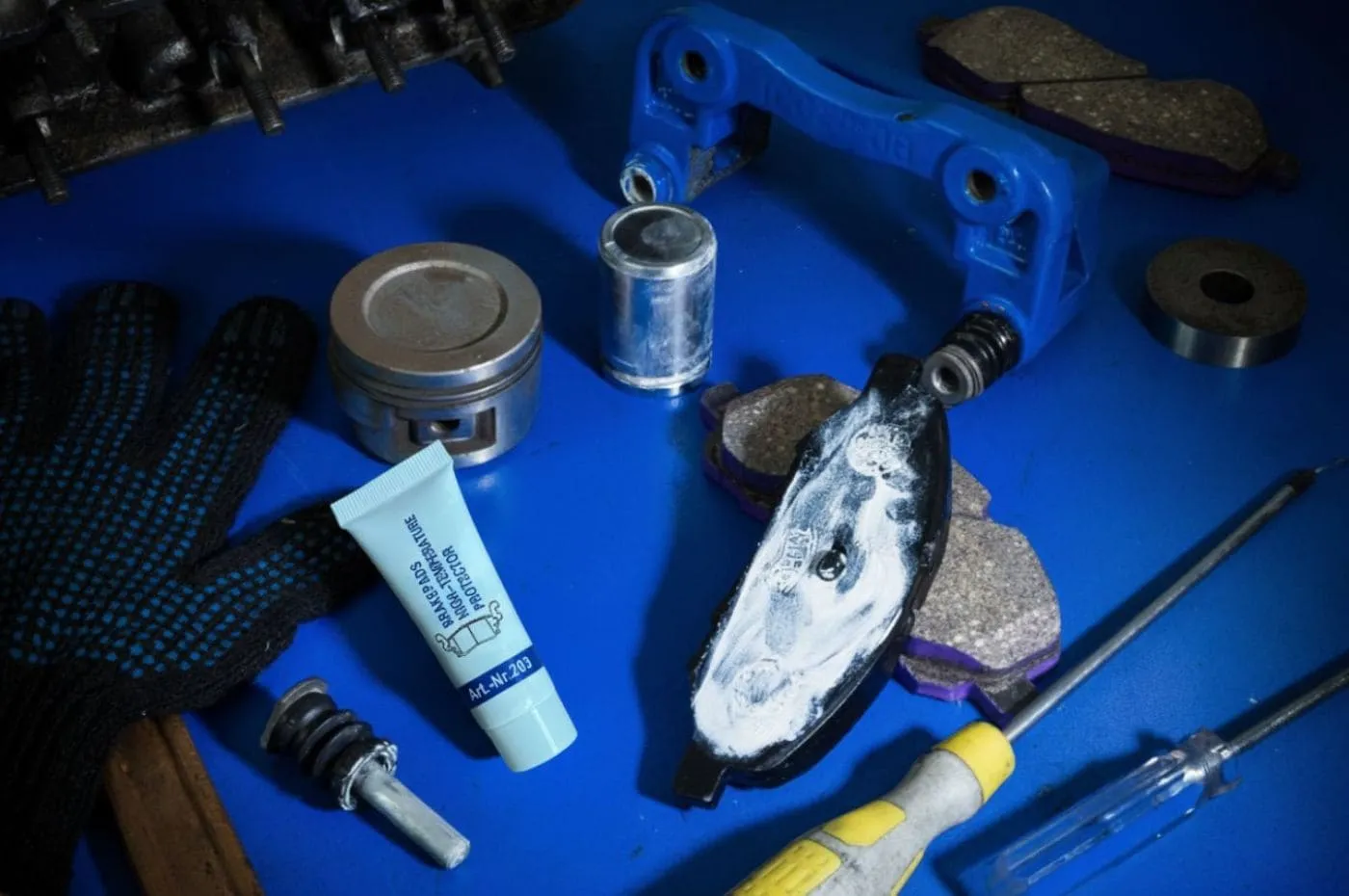
Final checklist for a squeak-free, safe brake job
- Disassemble and clean hardware; remove rust from abutment areas and hub faces.
- Inspect/replace abutment clips and boots; confirm EPDM integrity.
- Apply silicone grease to slide pins and inside boots (thin, even coat).
- Apply ceramic lube to pad backs/shims and abutment clip contact points (very thin).
- Lightly coat hub face with nickel/ceramic anti‑seize; wipe to a near film.
- Reassemble, torque to spec, pump pedal to seat pads.
- Road-test; recheck torque and confirm free caliper movement.
Morelic Pro Tip: Keep a dedicated “brake lube” brush and rag. Cross‑contamination is the fastest way to get grease on friction surfaces—and the easiest way to ruin a quiet, safe brake job.